NC Phone
Beat
Sixteen pads, a step grid that goes deeper than 16 steps, and an engine that was written for the audio thread rather than ported to it.
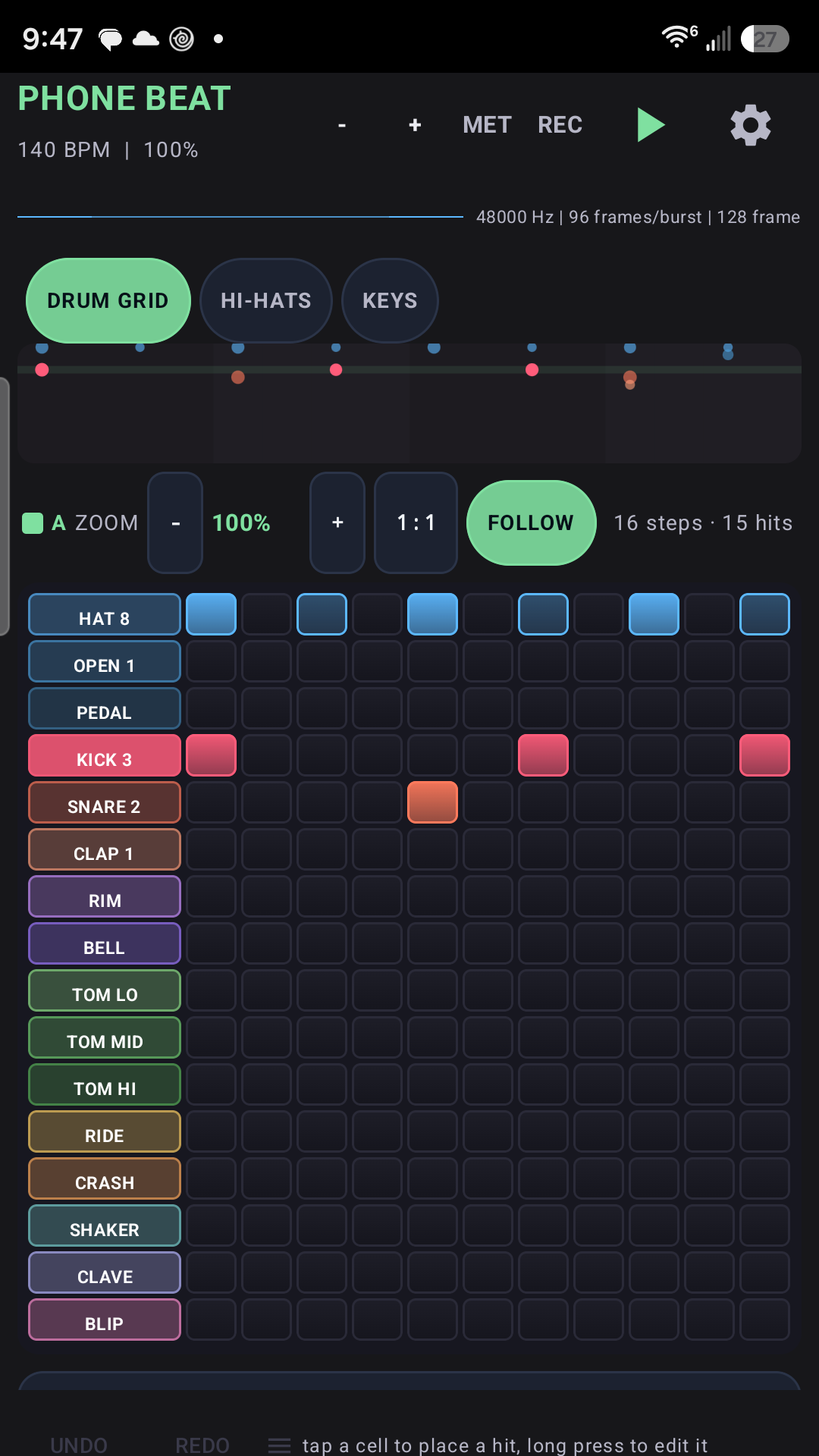
Phone Beat is the drum machine in the set. A C++17 engine handles sample playback and synthesis with no allocations on the audio thread, while the Kotlin layer owns the pattern, the undo stack and the project file. It exports .ncbeat into NC Studio and the lab.
- Pads16 across four banks
- Sequencer64 steps, ratchet, probability
- EngineC++17 · 48 kHz
- Export.ncbeat, WAV stems, MIDI
68 MB · Android 9.0+ · debug-signed · release notes
Free in beta · $5 now · $3 member preorder
The grid
Each row is a pad; each column is a step. Tap a cell to place a hit, long-press to edit velocity, ratchet, probability, swing and flam for that step. The grid scrolls past 16 steps without a page switch, so a four-bar pattern reads as one line. The row header shows the pad name and colour from the loaded kit.
Per-step probability is a percentage, not a coin flip hidden in a menu. Ratchet divides a step into 2–8 repeats, and each repeat inherits the step's velocity curve. Swing is global with per-step offset; both are saved in the pattern.
The engine
Samples are decoded off the audio thread into preallocated buffers. Voice stealing, envelopes and filters run in the native layer; parameter changes arrive through a lock-free queue. The design goal is simple: no malloc, no locks and no logging on the audio callback. The app reports its buffer size and sample rate in the header so you can see what the device actually granted.
Four onboard synths cover sub, stab, lead and noise. They can be sequenced from the same grid, and each has a small set of macros rather than a full synth page — the point is speed on a phone.
Pads, banks and performance
Four banks of 16 pads, switchable while the pattern runs. Pads respond to velocity from touch size and support hold/roll. The record button captures pad performance into the sequencer quantised to the current grid, so a chopped-in performance becomes editable steps.
FX and export
The mix tab has per-pad level, pan, tune and a send to a shared FX chain. Chains are saved in the project and travel with the .ncbeat package. Export writes individual stems or the full pattern; NC Studio opens the package with the pads mapped to tracks.
Install the beta
Download the APK on an Android 9.0+ phone and open it. Android asks once to allow installs from the browser; grant it for this file. The build is 68 MB and debug-signed, so uninstall any older Phone Beat build before installing — Android refuses to replace a differently signed copy. Play Protect may warn because this is a direct beta, not a Play Store release.
The beta is free. The public price is $5 for a licence that covers the app on devices you own. Members can preorder for $3 until December 1, when the preorder window closes. The APK is the same build you are testing.
Beta limits
Phone Beat is a public beta while the device-routing path is finished: reopening the audio stream after a headphone or Bluetooth route change is recorded as an open TODO. Use wired output for now. Pattern length is capped at 64 steps; song mode chains patterns but does not yet render a full arrangement.